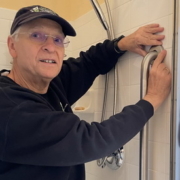
Team Leader Profile – Don Booth

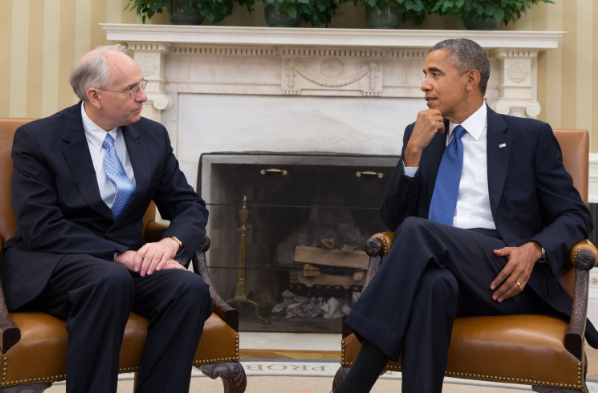
Don Booth with President ObamaFrom Rebuilding War‑Torn Countries to Repairing Local Homes

Retired diplomat Don Booth learned as a child to appreciate the world’s nations and cultures.

When he was 4, his mother and stepfather—both engineers for Aramco—moved the family from New Jersey to Saudi Arabia. During vacations the future Rebuilding Together-AFF team leader visited London, Paris, Rome, Barcelona, Copenhagen, Beirut and beyond, “so I knew there was a bigger world out there.”

And he gained interpersonal skills that would support his impressive foreign service career. “As an only child, I probably spent more time than most kids in an adult environment,” he recalls. “At one point, my dad said, ‘You’re very diplomatic.’ ”

Don moved at age 9 to Medfield, Mass., where he graduated from high school. He attended Georgetown University’s School of Foreign Service, earning a bachelor’s degree in foreign service with a major in international economics in 1976.

After passing the U.S. State Department’s Foreign Service exams, he was assigned to Gabon in west Africa. After three months he helped orient a new arrival—another foreign service officer named Anita—and two years later they married.

The couple had a succession of challenging State Department assignments in Liberia, Belgium, Romania and Greece, interspersed with jobs in Washington, D.C., where Don worked on Sudan, Uganda, Egypt and trade policy. He served as deputy director for Southern African Affairs, director of West African Affairs, and in the Bureau of International Organizations dealing with specialized agencies of the United Nations.

While in Belgium, Don earned a master’s in business administration through Boston University, and in Washington earned a master’s in national security studies from the National War College.

In 2005, President Bush appointed him U.S. ambassador to Liberia, where he helped rebuild institutions after 14 years of civil war. He was appointed U.S. ambassador to Zambia in 2008-10, and to Ethiopia in 2010-13. In 2013, President Obama asked him to be special envoy for Sudan and South Sudan, reporting to the president. After retiring in 2017, he was asked to return in 2019 as special envoy to Sudan—this time for the State Department—until retiring again in 2021.

Dangerous missions

Despite common perceptions that diplomats enjoy a life hosting receptions and ceremonies, Don and his family survived a number of harrowing experiences.

In 1982, Don, a colleague and a driver were dispatched to verify reports of a massacre at a remote Catholic mission in Uganda. En route, they were questioned at a checkpoint by skeptical soldiers who confiscated some of their supplies. Later they were stopped by soldiers who locked them in a dark hut before telling them, “You’re in luck today! The radio to Kampala worked and they said you’re OK—we don’t have to shoot you.” Finally, a commander in a town near the mission offered them a nighttime escort along a dirt road, startling them with gratuitous machine-gun fire from his two Jeeps. At the mission, Italian priests recounted how Idi Amin’s forces had killed civilians but spared the mission.

During the 1989 Romanian revolution, opposing forces traded gunfire outside the Booths’ home. They barricaded their windows with furniture until an embassy driver reached them during a brief lull. Don had to venture into the streets to report on the fighting, then evacuated with his children—then 2, 4, and 6—in a convoy that came under fire while racing to safety in Bulgaria. Anita, head of the embassy’s management section, remained in Bucharest until the family could be reunited in Romania.

Diplomats, Don notes, do “a lot of serious work engaging with people—some of whom are not inclined to be friendly—to try to get them to do things we want. And we often succeed at that.” What happens overseas affects the United States, he emphasizes. “Helping people to live peacefully and productively in their own country means you have a lot less immigration pressure.” With Africa projected to have 40 percent of the world’s working-age population by 2050, “They can either be productive in their own continent and develop it, or they can pick up guns and fight civil wars and force more people to flee.”

In retirement, Don remains active in foreign affairs with consulting, writing, lecturing and doing special projects for the Woodrow Wilson Center, Center for Strategic and International Studies, Washington Institute for Near East Policy, and other professional organizations. For Diplomats Without Borders, he’s travelled to Kenya three times to support the Austrian Center for Peace’s efforts to unify civilian political groups’ efforts to stop Sudan’s civil war—currently the world’s largest humanitarian crisis.

And Don and Anita continue to travel, planning upcoming trips to Singapore, Indonesia, France and Switzerland, and visiting their three children and two grandchildren.
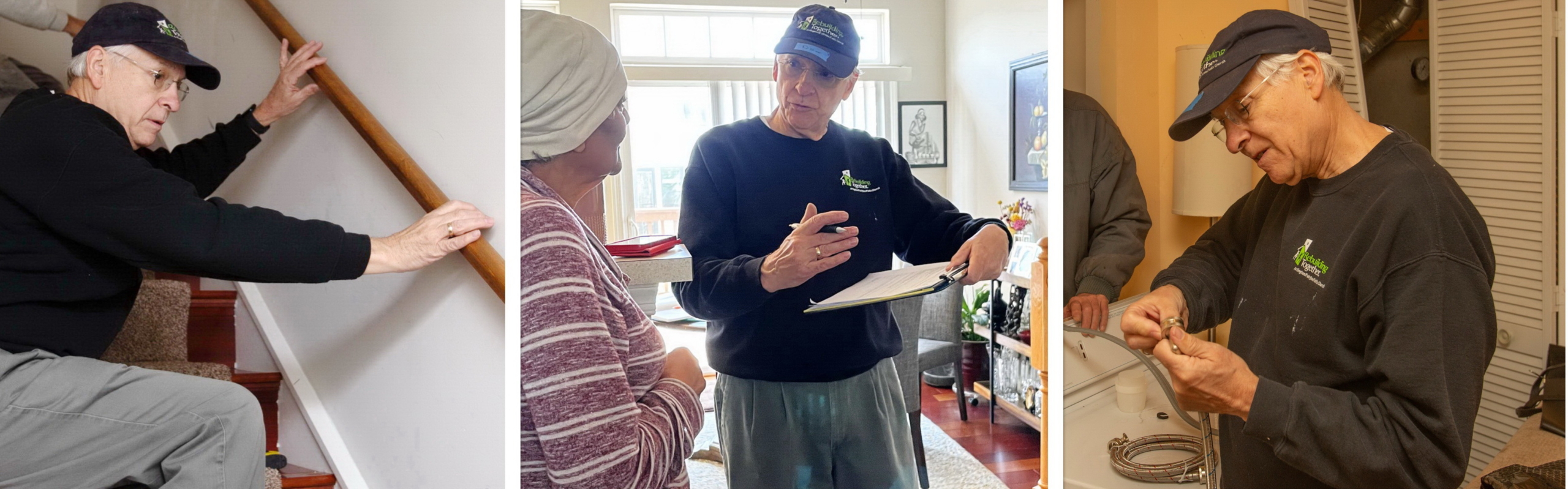
 

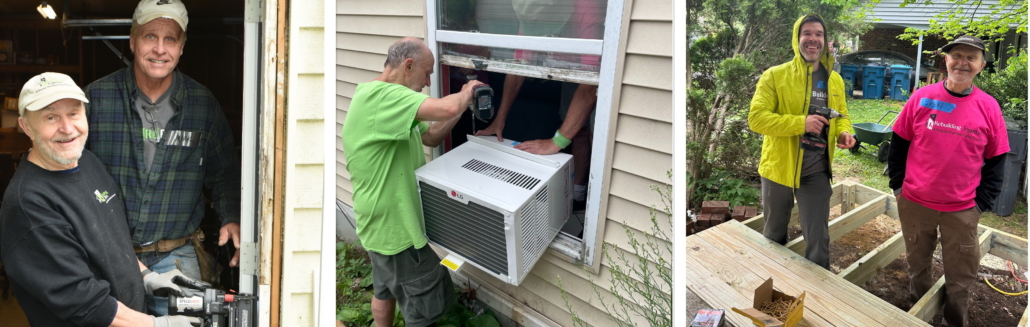
Collage of Don Booth making repairs


From global affairs to home repairs

So how did a globe-trotting career diplomat acquire advanced home repair skills? That, too, started as a child learning from his stepdad, a “putterer” with woodworking equipment who liked to fix and build things. In junior high and high school, Don enjoyed wood shop classes.

In 2017 he started volunteering with Habitat for Humanity, where another volunteer told him about RT-AFF and he joined in 2022. Now, as one of 10 volunteer team leaders, he assesses needed repairs at clients’ homes, prepares work plans, assembles needed supplies and tools, and supervises a team’s work.

Volunteering with RT-AFF “is a way to meet some great people, learn skills you can apply in your own house, and feel like you’re helping people, that you’re making a difference,” Don says. “It’s giving back in a way that I can see what we’re accomplishing. My mother always stressed that you’re put on this planet to try to make it a better place.”

Links:

Obama names special envoy for South Sudan and Sudan

https://www.usatoday.com/story/theoval/2013/08/28/obama-names-special-envoy-sudan-south-sudan/2725177/

U.S. sends envoy to Sudan to defuse crisis amid reports of rapes during military crackdown

https://abcnews.com/International/us-sends-envoy-sudan-defuse-crisis-amid-reports/story?id=63670823

Breaking the Deadlock in Sudan

https://www.washingtoninstitute.org/policy-analysis/breaking-deadlock-sudan
From a Cooling Crisis to a Safe and Healthy Home

Last August, a referral from Fairfax County’s Senior Cool Care program led us to Ms. S, an extremely low income condo owner facing the peak of summer without air conditioning. Although she had received a portable AC unit through Cool Care, she wasn’t able to install it on her own. That’s when our AC Rescue team stepped in.

When our AC Rescue team arrived, what began as a simple cooling fix quickly revealed a much larger need. Not only was the AC unit not in use, but nearly half of the condo’s electrical outlets weren’t working. After some careful troubleshooting, our team discovered tripped breakers and restored power that same day—bringing immediate relief as we installed the portable AC and cooled the home for the first time in months.

But the challenges didn’t stop there.

At the same time, other serious issues were impossible to miss. The condo had sustained significant damage from a water leak in the unit above—leaving holes in the ceilings, missing baseboards, and carpeting pulled up in an attempt to dry it out. It was clear Ms. S needed more than a quick AC unit install; she needed a safe and healthy home.

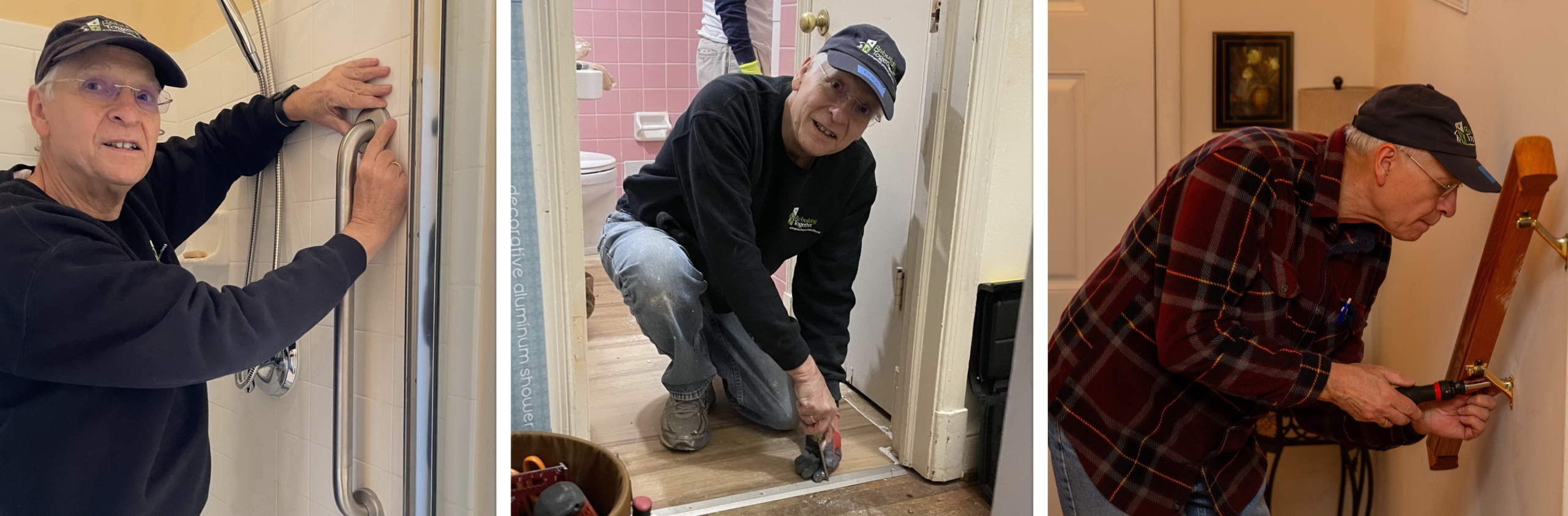
Our RT Express team quickly mobilized, assessing the home and developing a comprehensive plan. Over the following weeks, 12 volunteers worked together for 124 hours to transform the condo—patching and painting ceilings, repairing plumbing, and restoring functionality to the kitchen with a new garbage disposal, dishwasher, microwave, and lighting. In the bathroom, grab bars were installed for safety, while damaged flooring in the entryway was replaced and LED bulbs were installed in all light fixtures. Carpeting was refastened, and new baseboards brought the space back together.

Meanwhile, our AC Rescue program brought in a contractor to evaluate the central air system, which was ultimately deemed too old to repair. By combining available funding sources, we were able to take the unusual step of replacing the exterior unit entirely—ensuring Ms. S now has reliable, whole-condo cooling in time for the summer ahead.

In total, our volunteers resolved 10 critical health and safety issues, bringing Ms. S’s home into alignment with all 25 of Rebuilding Together’s Health and Safety Priorities.

What began as a call for help with a single air conditioner became a comprehensive effort to restore a safe, healthy, and comfortable home—with critical cooling support ensuring Ms. S is also protected from heat-related illness.

Thanks to your support, her home is now a place of safety and stability—and with summer around the corner, she can stay cool, secure, and at ease.

Team Leader Profile – Lander Allin

Lander AllinArlington, Va., is known for its leafy historic neighborhoods, lively commercial corridors and excellent public schools. Lander Allin’s impressive history of civic involvement has contributed to all of them.

Lander, a Team Leader for Rebuilding Together-AFF, has served as president of his neighborhood Alcova Heights Civic Association, president of the Columbia Pike Revitalization Organization (now called the Columbia Pike Partnership), and a member of the Public Facilities Review Committee helping to plan Arlington public schools. He also worked on a campaign to develop a streetcar line along Columbia Pike. Most recently, he served on the Career Center Working Group, which developed recommendations to add 700-800 high school students to schools in a limited, two-block area of Arlington.

Lander’s career has melded lifelong interests in urban planning, community development and public service.

Raised in Richmond, Va., where his father was a vice president of the Federal Reserve Bank of Richmond, Lander earned a bachelor’s degree in American government and a master’s in urban planning from the University of Virginia. After graduate school in 1982, he worked for the Fairfax County Housing and Community Development Dept., planning curb and gutter, sidewalk, and storm water infrastructure for older residential neighborhoods.

That led to a 33-year career with the U.S. General Services Administration. Initially he planned new federal buildings, including U.S. District Courthouses in Alexandria, Va., and Greenbelt, Md.

Later he helped manage the nationwide GSA fleet of 225,000 vehicles—buying, leasing, maintaining, repairing and selling cars, trucks and buses used by federal agencies and military bases. For a decade, he directed hundreds of public auctions that sold about 35,000 used vehicles annually.

When not pursuing community and civic affairs, Lander is an avid long-distance cyclist. In recent years, he and friends have cycled the 350-mile Erie Canal from Buffalo to Albany, N.Y.; the 180 miles from Albany to Manhattan; and the 440-mile Natchez Trace Parkway from Nashville, Tenn., to Natchez, Miss. Upcoming adventures include trails in southwest Virginia and from Columbus to Cleveland, Ohio.

Lander combines his passions for cycling and community service with volunteer work at Phoenix Bikes, a nonprofit that refurbishes donated bikes for adults and children, teaches repair and safely skills, and organizes group rides and other activities.

Lander Allin collage


Rolling up his sleeves with RT-AFF

After retiring in 2022, Lander learned of RT-AFF from a friend who was volunteering. He had acquired skills in plumbing, framing, sheet metal and roofing working on summer construction jobs during high school and college. And he had done similar volunteer work during college with what is now the AHIP Home Repair Nonprofit, as well as remodeling his 1935 Arlington home.

As a Team Leader, he assesses needed repairs at clients’ homes, prepares work plans, assembles needed supplies and tools, and supervises a team’s work.

Lander’s most impactful RT projects have been replacing collapsed floors in mobile homes and installing an exterior ramp for a senior citizen using a wheelchair who “was basically trapped in his house.” Afterwards, “He was able to roll down his ramp out of the house for the first time in two years.”

Lander enjoys learning and working on projects and finds them deeply rewarding. Working with RT-AFF is “a great way to get out and be productive and do something that’s meaningful,” he says. “Every small act like this can make a huge difference in people’s lives.”

Lander Allin collage

Links:

Alcoval Heights Civic Association

https://alcovaheights.com/


Columbia Pike Partnership

https://www.columbia-pike.org/


Public Facilities Review Committee

https://www.arlingtonva.us/Government/Commissions-and-Advisory-Groups/Planning-Commission/Public-Facilities-Review-Committee


Career Center Working Group

https://www.apsva.us/wp-content/uploads/2018/09/CCWG_Final_Report_090518.pdf


GSA Markets Auction Vehicles to the Public

https://www.government-fleet.com/145107/gsa-markets-auction-vehicles-to-the-public


Phoenix Bikes

https://www.phoenixbikes.org/


AHIP Home Repair Nonprofit

https://ahipva.org/

Safer Homes, Stronger Communities: Our 2025 Impact in Fairfax County

“When homes are safe and accessible, residents can remain independent, secure, and connected to the communities they call home.”
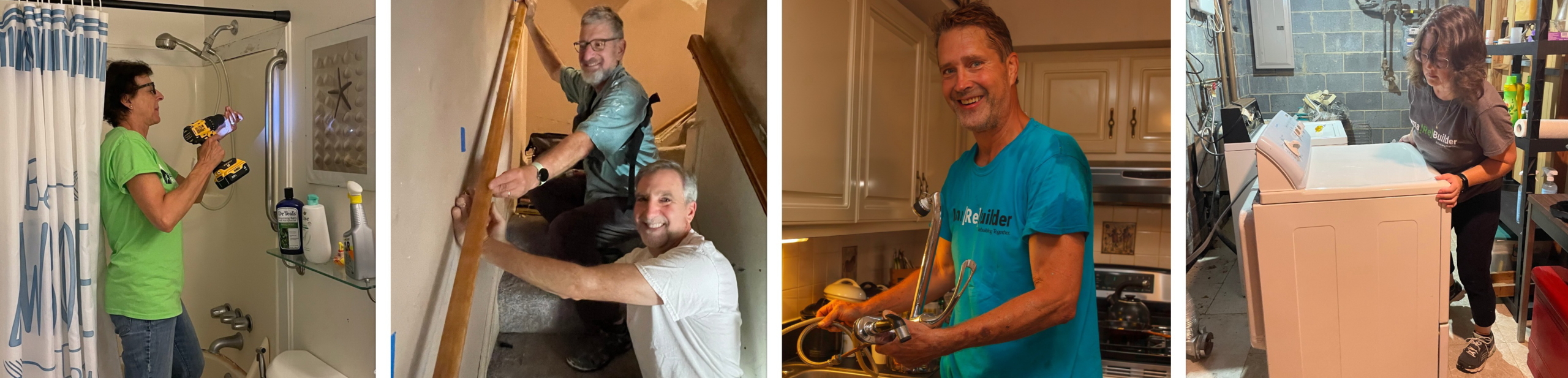
At Rebuilding Together Arlington/Fairfax/Falls Church (RT-AFF), our mission is simple but powerful: help neighbors live in safe, healthy homes. Through our 2025 contract with Fairfax County’s Department of Housing and Community Development, we provided critical home repairs and accessibility modifications that allow low-income homeowners—especially older adults and residents with disabilities—to remain safely in the homes they love.

Our Year One Contract Report highlights the impact of this work across Fairfax County. In 2025, RT-AFF completed a total of 1,070 repairs for 113 low-income homeowners, addressing health and safety hazards and helping residents remain independent and secure in their homes.

The repairs completed ranged from relatively small but life-changing improvements—such as grab bars, improved lighting, and smoke alarms—to larger projects like wheelchair ramps, appliance replacements, and even roof and HVAC system replacements.

Each repair is part of a comprehensive assessment designed to improve safety, accessibility, and overall housing stability.

The homeowners served reflect the populations most vulnerable to housing-related risks. Many are older adults, people living with disabilities, and households with limited incomes who face barriers to maintaining their homes on their own.

By addressing safety hazards and accessibility needs, these repairs help residents remain in place and reduce the risk of injury, displacement, or housing instability.

This work is made possible through the dedication of volunteers, partners, and supporters who contribute thousands of hours and resources each year. Together, they help ensure that critical repairs reach those who need them most.

We invite you to explore the Year One Contract Report to learn more about the repairs completed, the households served, and the community partnerships that make this work possible.


Volunteers Build a Lifeline: A Ramp That Makes Home Safe Again

The front steps of Ms. C’s mobile home in Alexandria were rotting beneath her feet. With limited mobility, she climbed them carefully, afraid of falling. Then her adult daughter moved back home after developing a serious medical condition that required frequent hospital visits and caused severe dizzy spells. Suddenly, both mother and daughter urgently needed a safer way to get in and out of their home—one that would meet their needs now and in the future.

Ms. C and her daughter called Rebuilding Together–AFF to ask whether we build wheelchair ramps. We did—and even better, we had a donated 40-foot aluminum ramp and rails in our storeroom that could work for their home. A site visit by staff and volunteers confirmed the property could accommodate an ADA-compliant ramp.

But this project was anything but simple. Because of the height of the mobile home’s front door, replacing the failing steps with a sturdy platform and new steps required a building permit. An air conditioning compressor in the yard further complicated the platform’s design.

Our staff and volunteers mobilized quickly. A new volunteer with CAD expertise created the site plan and initial drawings, while another volunteer with decades of experience navigating permits and inspections developed multiple versions of the plans for county review. Approval to use the existing concrete slab for three of the platform’s posts required a professional engineer’s load calculations. Thanks to our past board chair Scott Brideau, we secured this $1,000 analysis pro bono.


Additional hurdles remained. Gaining approval from Fairfax County for the twelve ramp posts to rest on footpads and pavers, rather than traditional concrete footers, required close coordination with the ramp manufacturer and ongoing communication throughout the permitting process. When the permit was approved, it marked a major milestone and a moment of celebration for our entire team.

We took full advantage of unseasonably warm days in early January. Over five workdays, volunteers dug three footers, built the platform and steps, assembled the ramp and rails, and passed county inspections for footers, framing, and final approval. In total, fifteen volunteers contributed 169 hours to make this ramp a reality. Special thanks to Bill Marshall, Marvin Greenberg, Jim Dillon, and Lou Wood for leading the design and construction and supporting our staff throughout the project.

Today, Ms. C and her daughter can safely come and go from their home with confidence. And our work isn’t finished. Once the snow melts, another Rebuilding Together–AFF team will return to repair a fallen gutter and downspout and complete additional health and safety repairs inside their home.

Ramp under construction

completed ramp

Team Leader Profile – David Throckmorton

David sitting on the stairs during a stairlift installationAerospace Engineer Brings Skills Down to Earth 

Repairing homes isn’t rocket science, but Rebuilding Together-AFF Team Leader David Throckmorton has made good use of his aerospace career. 

Inspired by the Apollo moon missions while growing up in Richmond and Charlottesville, Va., David majored in aerospace engineering at Virginia Tech and later earned a master’s in systems engineering from Johns Hopkins.  

As a civilian employee of the U.S. Naval Air Systems Command and the Defense Department’s Missile Defense Agency, David worked on developing the F-35 and F-18 fighter jets and advanced GPS-guided bombs. As a systems integrator, he worked with defense contractors’ mechanical and electrical engineers to ensure that the jets, their weapons and other components worked smoothly together. 

Later as a program manager for the Homeland Security Science and Technology Directorate, he worked with contractors developing ground vibration sensors for border areas that could distinguish between human and animal footsteps. 

The experience managing complex projects has served David well since becoming an RT-AFF Team Leader in 2024. Team leaders do assessments of needed repairs at clients’ homes, prepare work plans, assemble needed supplies and tools, and supervise a team’s work. In 2025, David took on additional responsibilities assessing homes needing stairlifts, scheduling the work, and managing installations with Lou Wood, an RT-AFF volunteer who refurbishes donated stairlifts. 

3 photos of David workingWide-ranging volunteering 

Since retiring in 2016, David has volunteered for a diverse variety of community services in addition to RT-AFF. 

“After retirement, I wanted to do things with my hands and things that challenged my brain,” he says. That desire led to serving four years on a backup call center for the national suicide hotline—staffing an early morning shift on Tuesdays—and one year with the Fairfax County domestic violence hotline. He also tutored students at the Fairfax County Adult High School. 

David has volunteered for eight years teaching computer skills for Northern Virginia Family Services Training Futures, which provides office skills and career training. And he helps his wife Debbie, who co-manages a food pantry at St. Matthew’s United Methodist Church in Annandale. 

David’s many volunteer activities earned him a 2024 Privilege Award for Outstanding Community Service from the Bernie L. Bates Foundation. The awards recognize Fairfax citizens who embody the values of the late Marion “Barney” Barnwell, a longtime RT-AFF board member and volunteer with many other Northern Virginia nonprofits  

Like many RT-AFF volunteers, David acquired do-it-yourself skills working on his home—an Alexandria, Va., condo where he remodeled the kitchen and bathroom. He first volunteered for the Alexandria Rebuilding Together chapter, then transferred to RT-AFF in 2021 when the Alexandria chapter paused operations during the Covid pandemic. 

What initially attracted David to Rebuilding Together was “doing hands-on stuff, but the other part of it was I get to do things for folks my parents’ age that I can’t do for them because they live 100 miles away.” 

Removing trip hazards on stairs, porches and decks are among the most useful repairs made for clients, he says. “It’s amazing to me how much a second handrail [on stairs] means to people. I’ve done it for my sister-in-law and parents. I recommend to anybody: Before you start thinking about moving, put in a second handrail.” Stairlifts are also impactful, especially in older Arlington homes where the bathroom is upstairs. 

What David finds most gratifying about volunteering for RT-AFF is “the homeowners’ thank-you’s at the end. The folks we help cannot really afford these improvements and are just so appreciative of everything we do. 

“It’s enjoyable just to be out with the team of people. You get to learn some stuff, and you get to help somebody.” 

three photos of David working

Links: 

Behind the Scenes with Lou Wood – RT-AFF Stair Lift Expert 

https://rebuildingtogether-aff.org/behind-the-scenes-with-lou-wood-rt-aff-stair-lift-expert/ 

Fairfax County Adult High School 

https://www.fcps.edu/academics/alternative-and-nontraditional-schools/fairfax-county-adult-high-school 

Northern Virginia Family Services Training Futures 

https://www.nvfs.org/assistance/training-futures 

St. Matthew’s Ken Jackson Food Closet 

https://www.stmatthewsumc.org/mission 

The 3rd Annual Privilege Awards and Community Recognition Celebration 

https://www.blbinc.org/post/the-3rd-annual-privilege-awards-and-community-recognition-celebration 


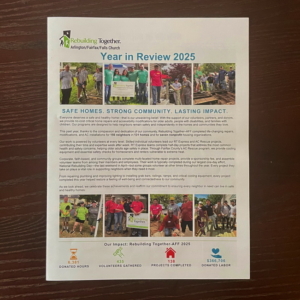
2025 Year in Review

As we begin 2026, we’re taking a moment to look back on the progress, partnerships, and people that shaped our work throughout 2025. Our 2025 Year in Review captures the milestones we reached together and the impact made possible through the collective efforts of our community. We’re proud to share this with you—stories and data that reflect not only what we accomplished, but why it matters as we move forward.


Jon Armstrong Retires from RT-AFF

Jon ArmstongJon Armstrong’s life of adventure, enterprise and resourcefulness has blended strenuous blue-collar labor with street-smart real estate investing and development.
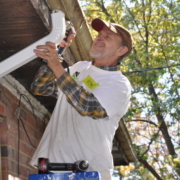
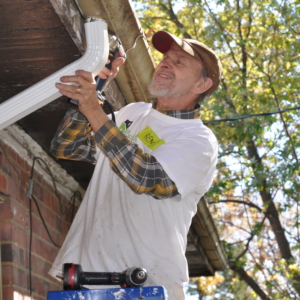
Jon’s unique combination of skills and experience has helped countless homeowners in Northern Virginia during his seven years as Rebuilding Together-AFF’s Director of Programs. He retired in December 2025.

Born in Montreal, Jon’s family lived in Hamilton and Waterdown, Ont., and Vancouver, B.C., before settling in Toronto when he was a teenager. His father, a salesman for a variety of companies, began buying properties and developing small shopping centers and commercial buildings.

While studying for a bachelor’s degree in civil engineering at Queens University in Kingston, Ont., Jon worked summer jobs as a miner in Northern Ontario, drilling a mile underground for iron ore with a “jackleg”—a jackhammer operated horizontally while propped up on a hydraulic leg. He loved the grueling physical labor, which paid well and funded his college expenses.

By his senior year, he was already demonstrating a talent for real estate investing in the planned community of Don Mills being developed near Toronto. With a small downpayment of $3,000-$4,000 and his father’s guarantee on the mortgage, Jon bought planned townhouses pre-construction and resold them before completion, making “a handsome return every time.”

After graduating in 1971, Jon worked another year in the mines before four years working for a management consulting firm, helping Ontario municipal governments manage road construction and maintenance projects. That was followed by a year doing public relations work for a French company mining uranium in northern Saskatchewan.

Jon acquired his real estate license and started buying houses to convert into rental triplexes or fourplexes, using subcontractors for remodeling and construction. When a friend persuaded him to build an addition on his house, the project led to more clients and Jon became a general contractor, specializing in commercial interiors for stores, offices, restaurants and other businesses.

A continental shift

In 1993, in his mid-40s, Jon got restless for new challenges. A friend who had moved to Costa Rica suggested he consider that country. After visiting and researching the country with the help of its business development agency, Jon and his family, with two children then 6 and 8, moved to San Jose.

Within a year, Jon had bought a property large enough to subdivide and build houses. When using subcontractors proved to be unreliable, he hired his own tradesmen, often employing up to 60 workers. Over 24 years, he built more than 65 homes.

In 2017, his wife Abby’s job with Amazon Web Services brought them back to the states, settling in Arlington, Va. Then 68, Jon assumed he was retired but quickly got bored. After meeting a former board member of RT-AFF, Allen Schirmer, he started volunteering for home repair projects. In January 2019, he was hired full-time to replace the retiring director of programs.

With RT-AFF Project Repair Coordinator Fritz Sturz, Jon assessed houses needing major repairs and matched them with corporate and church partners. He helped to schedule, plan and equip their teams of volunteers to work on annual National Rebuilding Day in April and other days throughout the year. In addition to homeowners, beneficiaries include some nonprofit agencies such as Hartwood Foundation, which operates residential services for people with intellectual and developmental disabilities.

Leaving a legacy, looking ahead

Although he had served on a couple charity boards in Toronto, working with RT-AFF “is in many ways the first time I’ve really seriously given back with my time,” said Jon. “It’s hugely impacting.”

Jon encourages others to volunteer with Rebuilding Together, which has affiliates nationwide. If you lack DIY skills, “they’ll put you with a skilled volunteer who love to teach how to put in a handrail or install a grab bar,” he said. “You can pick your projects, most of which are only a half day.”

And a bonus is “the camaraderie—you meet some very interesting people. You never know who you’re standing beside—there are volunteers with some pretty impressive resumes.”

Now retired for a second time, Jon and Abby moved to North Vancouver to live near their daughter Maddy, a solutions architect for a software consulting firm. Their son Austin works in technology sales in London, England.

Jon’s looking forward to hiking, biking and taking up pickleball. And—not surprisingly—he’ll be hiring contractors to renovate the home they purchased.

Team Leader Profile – Ken Mittelholtz

Ken Mittelholtz

Ken Mittelholtz

Public Service Is Deeply Ingrained in Ken Mittelholtz

Commitment to public service is deep-rooted in Ken Mittelholtz. The long-time Rebuilding Together team leader has put his altruism to work as a teacher, a two-time Peace Corps volunteer, and a federal employee for the U.S. Coast Guard and Environmental Protection Agency.

Ken credits much of his public spirit to his parents. His father worked in education and management roles for the Bureau of Indian Affairs while raising Ken and his brother in New Mexico, Minnesota, Wisconsin and North Dakota. “My dad was by far the biggest one that influenced me in terms of helping others. And that probably got me also heavily involved in public service.”

After graduating from Bemidji State University in Minnesota in 1967 with a degree in chemistry, Ken taught science in high school for several years. He joined the Peace Corps in the early 1970s, teaching science in junior and secondary schools in the Republic of The Gambia, an English-speaking former British colony.

Ken then taught science in a private school in Maryland for four years before returning to The Gambia for another two years with the Peace Corps, this time working in the attorney general’s office on environmental legislation to protect wildlife.

It takes a village

The Peace Corps left a deep impression on Ken. “You learn more about them than they do about you. You’re enmeshed in the culture and you really do learn the issues that they’re facing,” he says. “Anybody who has come back from the Peace Corps gets involved with service stuff back here.”

Ken notes that “everybody wants to be part of a village [and] have people come and help you. But to be part of a village, you also need to be a villager. You need to do things.”

The Peace Corps was followed by an environmental job with the Coast Guard, issuing permits for bridges. In 1984 he moved to the EPA, doing environmental reviews of roads, airports, military and other federal construction projects until retiring in 2010.

When he worked for the government, people would often tell Ken he could earn more as a consultant. But he always felt that “it’s important for us to do these types of things. The public service has always been kind of important to me.”

In the 1980s Ken began volunteering with Annandale Christian Community for Action, a group of 21 churches in the Annandale area. ACCA sponsors a variety of food pantry, daycare, furniture donation, financial aid, transportation and other programs for Northern Virginia families, as well as partnering with Rebuilding Together.

Ken’s wife Camille and their two daughters are also longtime volunteers with ACCA. Both have served as presidents, and the couple was honored with the Volunteer Fairfax Community Champion award in 2013.

Ken Mittelholtz collage

Helping people age in place

Unlike some Rebuilding Together team leaders with engineering and construction backgrounds, Ken’s do-it-yourself skills are mostly self-taught from working on his previous and current homes.

His first project was in 1994 when ACCA sponsored teams to repair two houses on National Rebuilding Day for the nonprofit, then called Christmas in April. He has continued every year since, stepping up his involvement when the organization began repairing homes year-round.

He lauds the nonprofit as ”a very neat program of helping people stay in their homes. As we get older now, it rings true a little bit more of trying to stay in your home for a longer period of time.”

Many elderly clients, he notes, are “house rich and money poor. They’re living on Social Security and don’t have enough money to do any of the maintenance” and are unable to do repairs themselves.

He cites installing grab bars in bathrooms and adding a second handrail to stairways as among the most useful improvements commonly made. He believes grab bars could eventually be required by building codes because “you don’t have to be old to slip in the tub and fall.”

Ken enjoys the camaraderie of working with other volunteers “as we all have this kind of commitment of helping people” to stay in and enjoy their homes.

He tells potential volunteers: “You’ll get a big benefit from it. I think you’ll feel good. It’s a neat feeling of helping people out.”

Links:

County Residents Ken and Camille Mittelholtz Named Community Champions

https://patch.com/virginia/annandale/an–county-residents-ken-and-camille-mittelholtz-nameb0521a1c1e

Annandale Christian Community Action Service Programs

https://accacares.org/service-programs

Ken Mittelholtz collage

Volunteer Profiles are a continuing series celebrating the dedicated Rebuilding Together Team Leaders and volunteers, who come from all walks of life—engineering, construction, government, diplomacy, the military, and more.
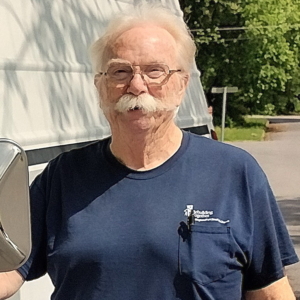
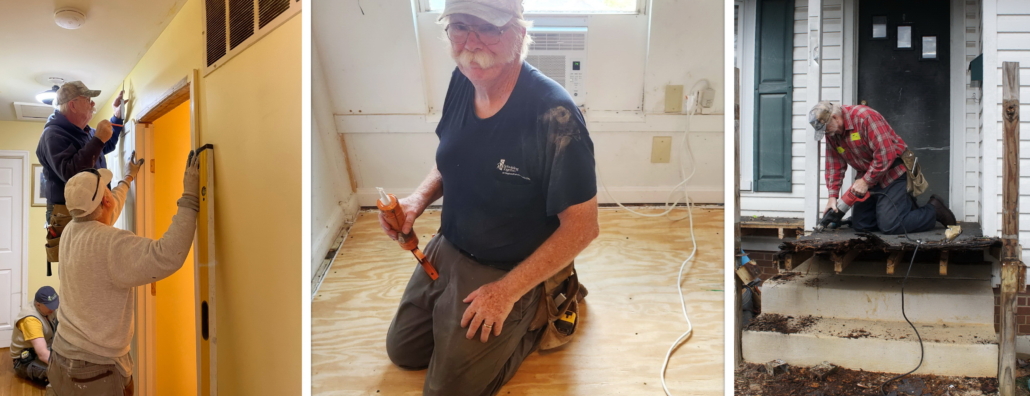
The profiles are written by Leon Rubis, a retired journalist and editor who started volunteering with us in 2021. A long-time DIYer, Leon says, “I thought I knew a lot, but I’ve learned so much more from working alongside our experienced teams. Every project feels like an episode of This Old House.”

In addition to making repairs and modifications with us as part of the RT Express program, Leon is now using his writing skills to spotlight the amazing people who make our work possible.

Team Leader and Volunteer Profiles

Leon RubisWelcome to our new series celebrating the dedicated Rebuilding Together Team Leaders and volunteers, who come from all walks of life—engineering, construction, government, diplomacy, the military, and more.

The profiles are written by Leon Rubis (pictured at right), a retired journalist and editor who started volunteering with us in 2021. A long-time DIYer, Leon says, “I thought I knew a lot, but I’ve learned so much more from working alongside our experienced teams. Every project feels like an episode of This Old House.”

In addition to making repairs and modifications with us as part of the RT Express program, Leon is now using his writing skills to spotlight the amazing people who make our work possible.

Team Leader Profile – Jim Dillon

Jim Applies Do-it-Yourself Skills to VolunteeringJim Dillon

When people need help, Jim Dillon doesn’t wait for nonprofit agencies to organize a response. The long-time Rebuilding Together volunteer often jumps in on his own.

After Hurricane Katrina slammed the Gulf Coast in 2005, Jim leaped into action—ultimately making six trips to Mississippi and New Orleans to repair damaged homes.

He first helped a family friend in Bay St. Louis, Miss., whose two brothers’ low-lying homes were flooded. Jim and a friend stayed for three weeks in another damaged house owned by a sister while repairing it and other homes.

That led to volunteering for a small Catholic church in New Orleans’ Ninth Ward. Many of the parishioners had left their flooded homes, leading the pastor to fund home repairs and recruit volunteer workers “just so we can bring people back to his parish.” Jim and other volunteers stayed on the second floor of the church school. “They found houses for you to work on during the day, and just gave you an address, [saying] go on over and help these folks as best you can.”

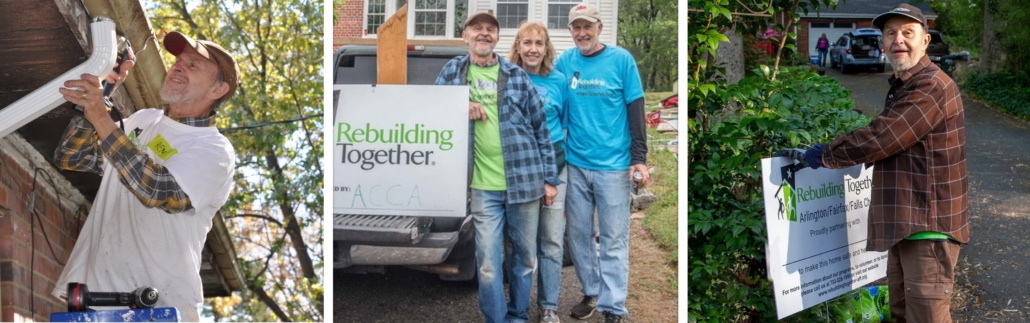
Collage of three photos of Jim Dillon volunteering his time.

All in the family

Jim, raised in Hamburg, N.Y., perhaps inherited some mechanical talent along with a desire to help others. His father was a civil engineer and two older brothers also became civil and mechanical engineers. A sister became a missionary with the Maryknoll nuns and has “traveled all over the world doing all kinds of good things for all kinds of different folks.”

Jim graduated from the University of Buffalo in 1971 with a mechanical engineering degree. He moved to Northern Virginia for a civilian job with a U.S. Army research and development center at Fort Belvoir until retiring in 2003.

Jim initially wrote specifications for construction equipment the Army purchased, and later designed vehicles and systems that could clear land mines. Other work involved retrofitting vehicles like Humvees and cargo trucks with mine blast protection such as deflectors, seats that absorb blast impacts, fragment-resistant floor mats, and extra seat restraints.

Despite his independent self-starter streak, Jim has volunteered with a variety of nonprofit service organizations.

He started working for Rebuilding Together’s predecessor, Christmas in April, after seeing a television news report about one of its local repair projects in 1994 and thinking “Wow, that’s pretty cool. I’d like to do that.”

In 1996, Jim also started working with the Catholic Diocese of Arlington’s Work Camp summer program, in which high-school-age parishioners stay for a week at a school in Virginia while working on repairs for local homeowners referred by local governments, churches and word-of-mouth.

“We started working on maybe a couple of dozen houses during the mid ‘90s. And over the years that has grown to maybe 800 kids working on over 100 homes for four days.”

The teens are accompanied by adult chaperones and “contractors” like Jim who provide technical training and supervision to the work crews. “I hand them all the tools and show them how to do it. And then I watch them for a while and if they feel comfortable with it—go for it.”

A Travellin’ Van

Even with Work Camp, Jim has independently extended his efforts beyond the organized summer program.

He and others visit and evaluate houses in the fall to work on next June. But “when you go into a house and see that the hot water heater’s leaking or the furnace doesn’t work, well, you can’t just tell the family, ‘I’ll be back in six months to help you’—they need it right now. So [with] a few friends of mine that I met at Rebuilding Together, we volunteered our time to go out and do some of these projects ahead of time.

“And then, like with Rebuilding Together, once you get into these projects and sometimes you can’t finish them during the day, you may have to go back a time or two after that. And that was the same thing with summer camp with the high school kids. You got to go back the next week or the next month and try to finish off all the projects.”

Such dedication prompted Jim to buy himself a retirement gift in 2004—a 2003 Chevrolet van that serves as a traveling hardware store. “I learned from summer camp that when you work far away from the local hardware store, you try to bring as much of the stuff as you can.” Jim’s wife Joan, who was supportive of his sometimes lengthy volunteer trips, first saw the van for sale and encouraged him to buy it.

One of Jim’s most challenging projects with Rebuilding Together was a small condemned house it renovated in 2017 in Fairfax City. Foundation leaks from rain and plumbing led to termite infestations and structural deterioration making the house uninhabitable. Rebuilding Together volunteers worked more than 2,400 hours on the house—1,000 of them by Jim—aided by volunteers, funding and supplies from many other local nonprofits, government agencies and contractors. While Jim credits “a whole team effort for all the different things that needed to be done in the house,” his own contributions earned him the 2018 Senior Volunteer award from Volunteer Fairfax.

A Job For Everyone

Jim emphasizes that you don’t need extensive knowledge or tools to volunteer for Rebuilding Together. He encourages amateur handymen and women at all skill levels to volunteer and learn on the job. “There are always projects, parts of a task that can be done by people who have little or no skills. So, don’t be afraid that you don’t know how to do all these things.”

Even with Jim’s extensive background, “Every project I work on is a learning experience, whether it’s the technical aspects or just dealing with different groups of individuals.”

Jim enjoys the “challenge of going into different situations and being able to finish it all in a relatively short amount of time.” And he appreciates that Rebuilding Together offers flexible scheduling and local opportunities. “One thing that made it attractive for me was that these are my neighbors that I drive by quite frequently. You’re helping your local neighbors.”

Links:

Catholic Diocese of Arlington Work Camp

Nonprofit welcomes Fairfax City resident back home

Love Your Neighbor Made Manifest – Community Rebuilds Fairfax Home

‘Celebrating the Magic of Giving Back’ in Fairfax County


Another collage of 3 photos of Jim Dillon volunteering