
Team Leader Profile – Don Booth
 From Rebuilding War‑Torn Countries to Repairing Local Homes
Retired diplomat Don Booth learned as a child to appreciate the world’s nations and cultures.
When he was 4, his mother and stepfather—both engineers for Aramco—moved the family from New Jersey to Saudi Arabia. During vacations the future Rebuilding Together-AFF team leader visited London, Paris, Rome, Barcelona, Copenhagen, Beirut and beyond, “so I knew there was a bigger world out there.”
And he gained interpersonal skills that would support his impressive foreign service career. “As an only child, I probably spent more time than most kids in an adult environment,” he recalls. “At one point, my dad said, ‘You’re very diplomatic.’ ”
Don moved at age 9 to Medfield, Mass., where he graduated from high school. He attended Georgetown University’s School of Foreign Service, earning a bachelor’s degree in foreign service with a major in international economics in 1976.
After passing the U.S. State Department’s Foreign Service exams, he was assigned to Gabon in west Africa. After three months he helped orient a new arrival—another foreign service officer named Anita—and two years later they married.
The couple had a succession of challenging State Department assignments in Liberia, Belgium, Romania and Greece, interspersed with jobs in Washington, D.C., where Don worked on Sudan, Uganda, Egypt and trade policy. He served as deputy director for Southern African Affairs, director of West African Affairs, and in the Bureau of International Organizations dealing with specialized agencies of the United Nations.
While in Belgium, Don earned a master’s in business administration through Boston University, and in Washington earned a master’s in national security studies from the National War College.
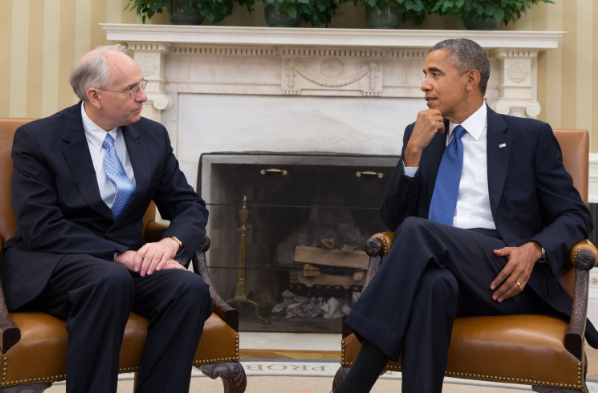
In 2005, President Bush appointed him U.S. ambassador to Liberia, where he helped rebuild institutions after 14 years of civil war. He was appointed U.S. ambassador to Zambia in 2008-10, and to Ethiopia in 2010-13. In 2013, President Obama asked him to be special envoy for Sudan and South Sudan, reporting to the president. After retiring in 2017, he was asked to return in 2019 as special envoy to Sudan—this time for the State Department—until retiring again in 2021.
Dangerous missions
Despite common perceptions that diplomats enjoy a life hosting receptions and ceremonies, Don and his family survived a number of harrowing experiences.
In 1982, Don, a colleague and a driver were dispatched to verify reports of a massacre at a remote Catholic mission in Uganda. En route, they were questioned at a checkpoint by skeptical soldiers who confiscated some of their supplies. Later they were stopped by soldiers who locked them in a dark hut before telling them, “You’re in luck today! The radio to Kampala worked and they said you’re OK—we don’t have to shoot you.” Finally, a commander in a town near the mission offered them a nighttime escort along a dirt road, startling them with gratuitous machine-gun fire from his two Jeeps. At the mission, Italian priests recounted how Idi Amin’s forces had killed civilians but spared the mission.
During the 1989 Romanian revolution, opposing forces traded gunfire outside the Booths’ home. They barricaded their windows with furniture until an embassy driver reached them during a brief lull. Don had to venture into the streets to report on the fighting, then evacuated with his children—then 2, 4, and 6—in a convoy that came under fire while racing to safety in Bulgaria. Anita, head of the embassy’s management section, remained in Bucharest until the family could be reunited in Romania.
Diplomats, Don notes, do “a lot of serious work engaging with people—some of whom are not inclined to be friendly—to try to get them to do things we want. And we often succeed at that.” What happens overseas affects the United States, he emphasizes. “Helping people to live peacefully and productively in their own country means you have a lot less immigration pressure.” With Africa projected to have 40 percent of the world’s working-age population by 2050, “They can either be productive in their own continent and develop it, or they can pick up guns and fight civil wars and force more people to flee.”
In retirement, Don remains active in foreign affairs with consulting, writing, lecturing and doing special projects for the Woodrow Wilson Center, Center for Strategic and International Studies, Washington Institute for Near East Policy, and other professional organizations. For Diplomats Without Borders, he’s travelled to Kenya three times to support the Austrian Center for Peace’s efforts to unify civilian political groups’ efforts to stop Sudan’s civil war—currently the world’s largest humanitarian crisis.
And Don and Anita continue to travel, planning upcoming trips to Singapore, Indonesia, France and Switzerland, and visiting their three children and two grandchildren.
From global affairs to home repairs
So how did a globe-trotting career diplomat acquire advanced home repair skills? That, too, started as a child learning from his stepdad, a “putterer” with woodworking equipment who liked to fix and build things. In junior high and high school, Don enjoyed wood shop classes.
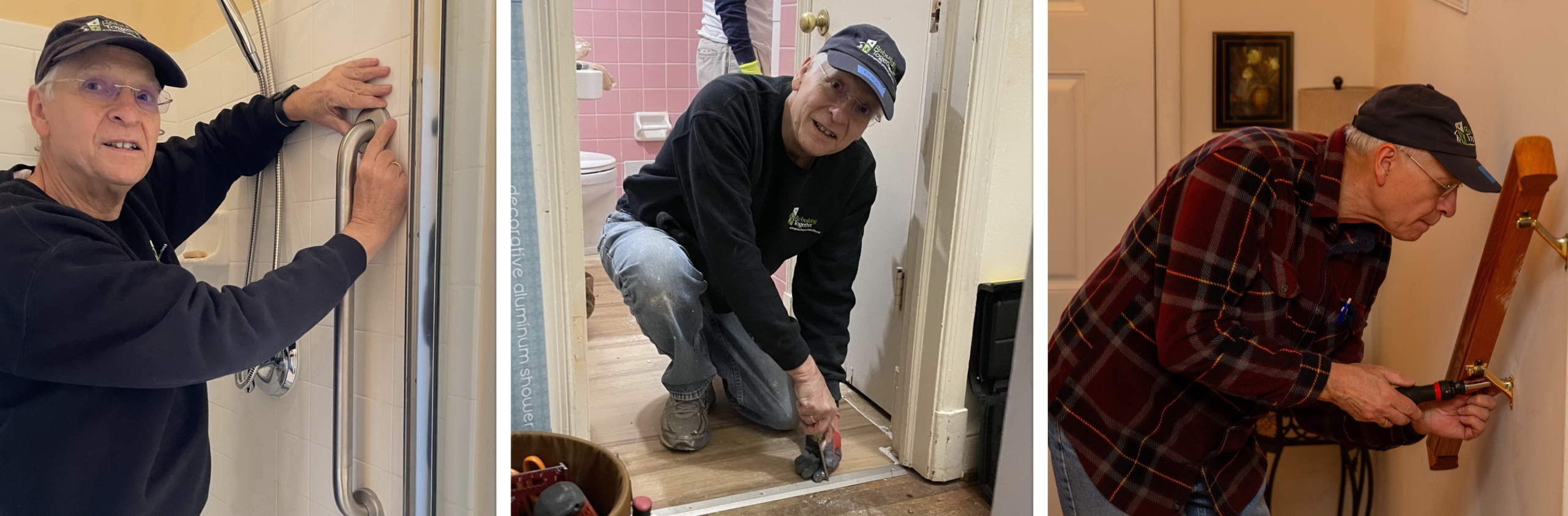
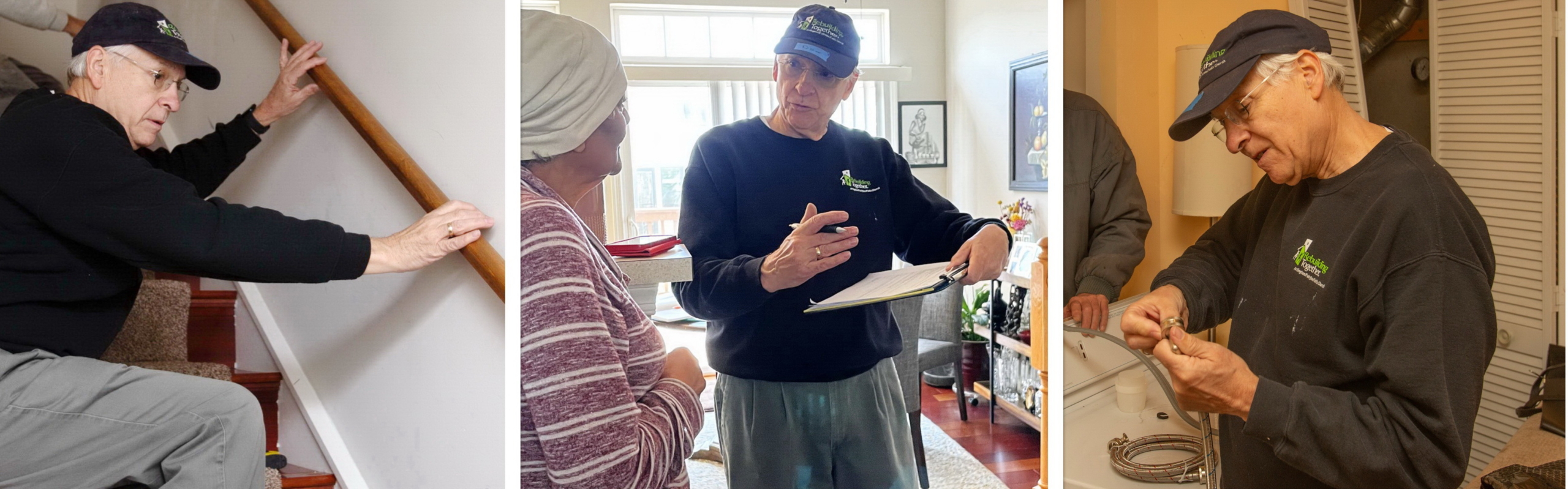
In 2017 he started volunteering with Habitat for Humanity, where another volunteer told him about RT-AFF and he joined in 2022. Now, as one of 10 volunteer team leaders, he assesses needed repairs at clients’ homes, prepares work plans, assembles needed supplies and tools, and supervises a team’s work.
Volunteering with RT-AFF “is a way to meet some great people, learn skills you can apply in your own house, and feel like you’re helping people, that you’re making a difference,” Don says. “It’s giving back in a way that I can see what we’re accomplishing. My mother always stressed that you’re put on this planet to try to make it a better place.”
Links:
Obama names special envoy for South Sudan and Sudan
U.S. sends envoy to Sudan to defuse crisis amid reports of rapes during military crackdown
https://abcnews.com/International/us-sends-envoy-sudan-defuse-crisis-amid-reports/story?id=63670823
Breaking the Deadlock in Sudan
https://www.washingtoninstitute.org/policy-analysis/breaking-deadlock-sudan